

Torsional vibration calculations – marine propulsion
HEXAMECA supports engine manufacturers, shipyards and system integrators in the analysis and validation of marine propulsion systems.
Torsional vibration calculations (TVC) are used to assess the dynamic behaviour of power transmission systems and to identify critical speeds as well as vibratory stresses.
Torsional vibrations are inherent to the operation of internal combustion engines and transmission systems. In the marine sector, they represent one of the most critical phenomena affecting the shaft line, crankshaft and associated components. Insufficient analysis may result in excessive vibratory stresses, the occurrence of critical speeds within the operating range, or even major failures.
TVC are therefore essential from the design stage, when modifications are still possible and cost-effective. They help secure transmission system architectures, ensure compliance with classification society requirements, validate the selection of couplings and damping devices, and more generally reduce the risk of failures during operation.
A torsional vibration calculation consists in modelling the torsional dynamic behaviour of a power transmission system, from the engine to the propeller or the driven machine.
When should a TVC be performed?
A torsional vibration study is required in particular in the following cases:
- design of a marine propulsion system,
- validation of an existing shaft line,
- modification of an installation (coupling, inertia, additional equipment),
- integration of a generator set or driven machinery,
- analysis of abnormal vibratory behaviour.
Applications
HEXAMECA is involved in particular in:
- marine propulsion systems,
- complete shaft lines (engine – coupling – shaft – propeller),
- marine generator sets,
- modifications & retrofits of existing installations.
Analysed components
Torsional vibration calculations carried out by HEXAMECA cover the entire power transmission system, including:
- engine and crankshaft,
- couplings (rigid or flexible),
- intermediate shafts and propeller shaft,
- propeller or driven machine (alternator, pump, etc.),
- possible damping devices.
Calculation methodology
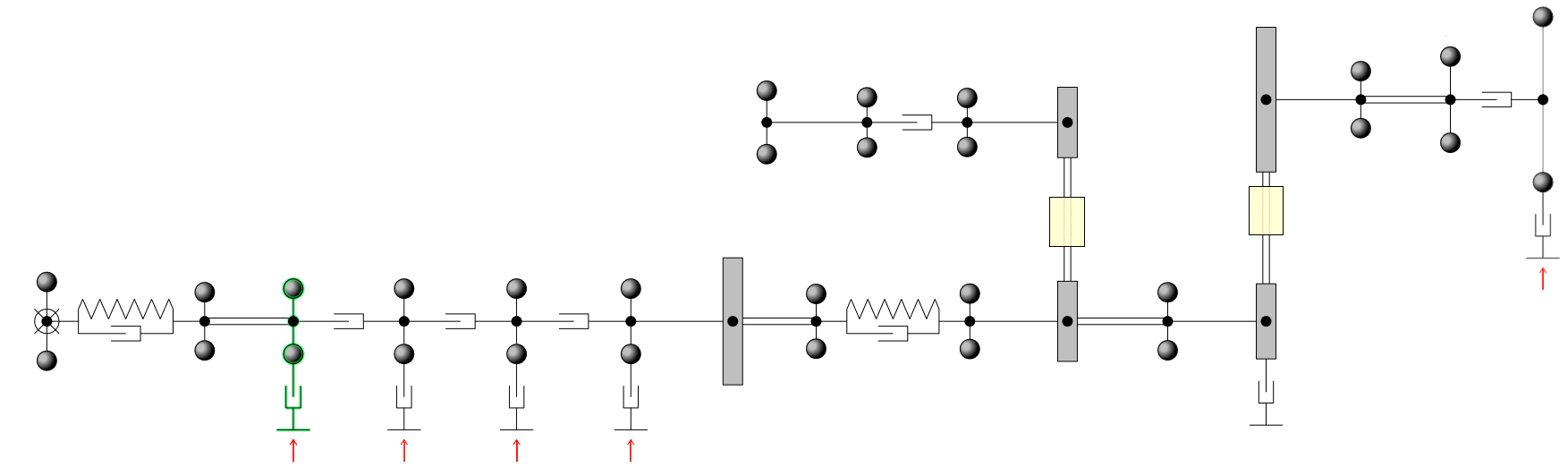
The calculations are performed using a torsional model of the system, taking into account inertias, stiffness and damping. The study generally includes:
- calculation of natural frequencies and vibration modes,
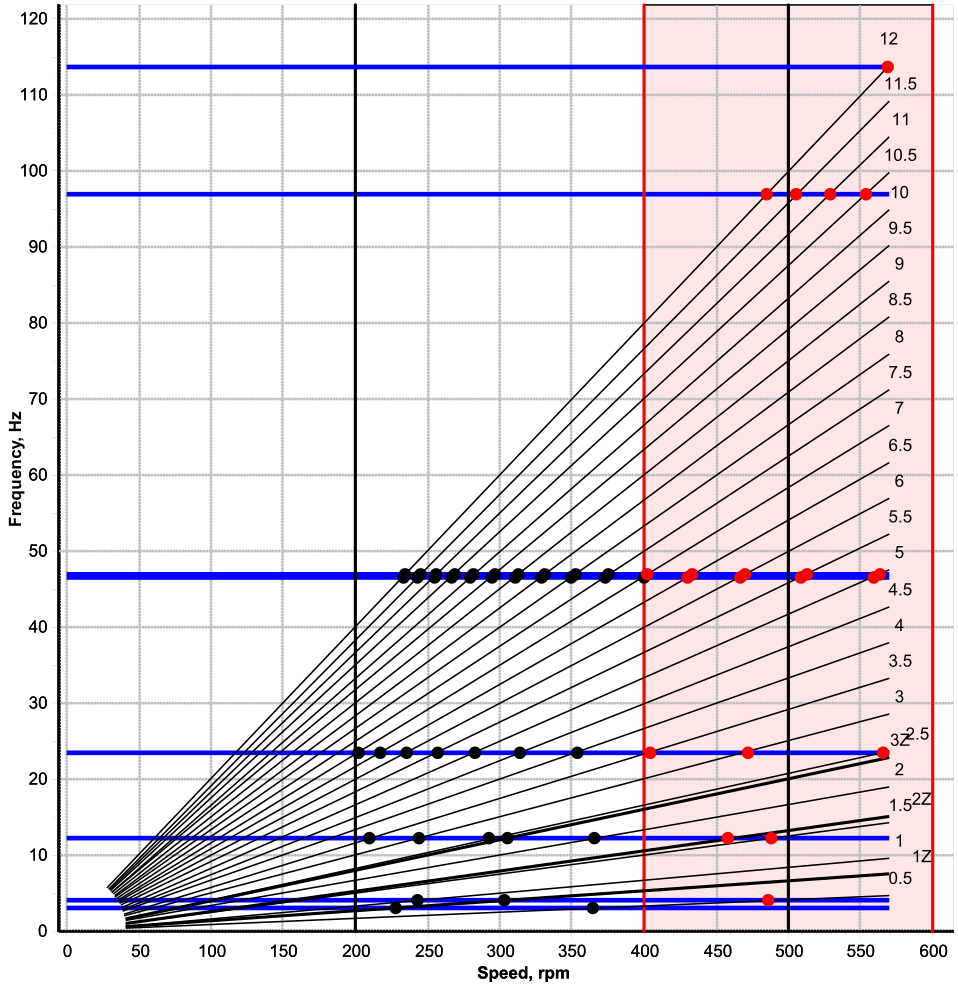
- establishment of the Campbell diagram,
- identification of critical speeds,
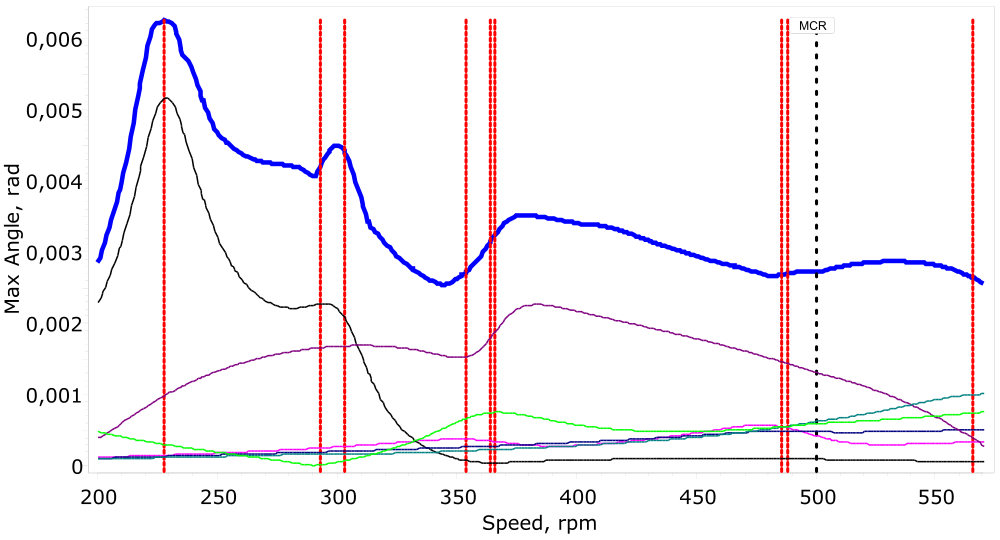
- analysis of vibratory response over the operating range,
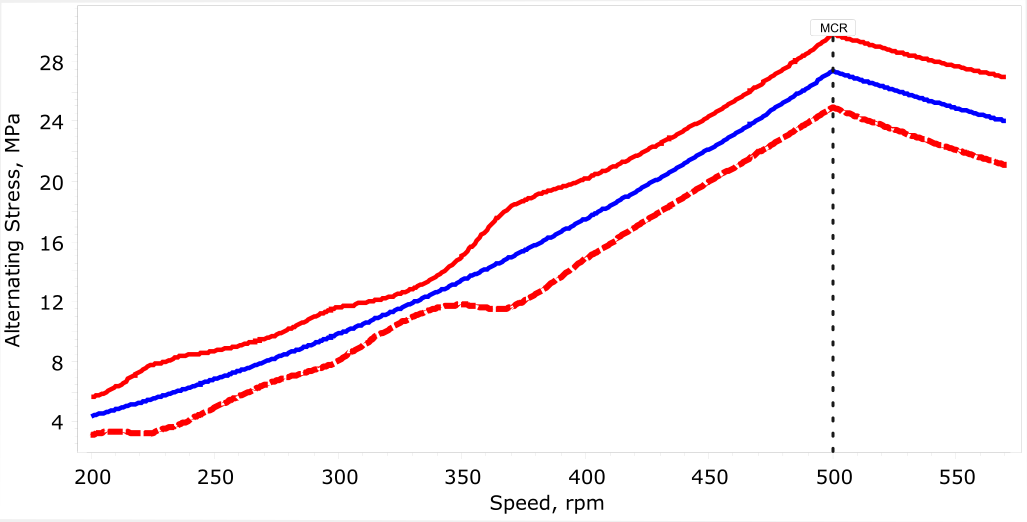
- evaluation of stresses in critical components,
- analysis of specific configurations (normal operation, degraded modes).
This approach enables precise identification of critical operating zones.
Results and deliverables
The studies result in a structured report including:
- assumptions and input data,
- torsional model of the system,
- natural frequencies and critical speeds,
- vibratory analyses (normal operation and specific cases),
- stress evaluation,
- identification of safe or restricted operating zones,
- design recommendations (coupling, inertia, damping, etc.).
These elements support technical discussions with classification societies and help secure design decisions.
Software used
TVC are performed using ShaftDesigner, a specialised software dedicated to the analysis of marine propulsion shaft lines and torsional vibrations.